
Maritime trade in the 16th and 17th centuries expanded rapidly as European powers increased their presence across the Atlantic. Merchant ships carried valuable goods such as spices, silver, textiles, and raw materials between continents. These routes became the foundation of global trade, but they also created new risks.
As trade routes became more predictable, they also became more vulnerable. Ships often followed established paths, making it easier for hostile forces to anticipate their movements. This environment created opportunities for those willing to operate outside the law.
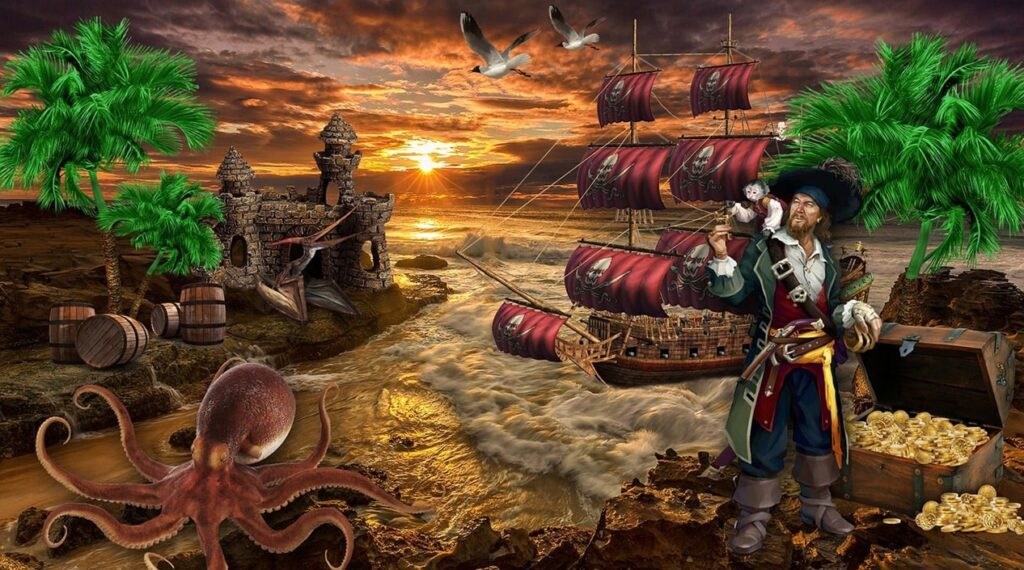
Piracy did not emerge randomly. Many pirates were experienced sailors who understood navigation, shipping schedules, and the structure of maritime commerce. With this knowledge, they were able to identify weaknesses and act strategically rather than impulsively.
This connection between preparation and decision-making is explored further in Risk, Strategy, and Opportunity on the Open Sea, where similar patterns are examined in greater detail.
The conditions at sea also played a role. Long voyages, limited resources, and strict discipline aboard merchant ships pushed some sailors toward alternative paths. For certain individuals, piracy offered not just the possibility of profit, but also a different form of autonomy.
Over time, piracy became closely tied to the systems it exploited. Trade networks expanded, and so did the scale and organization of pirate activity. Some crews operated in loose formations, while others developed more structured approaches to coordination and attack.
Understanding piracy in this context reveals that it was not simply about violence or rebellion. It was deeply connected to economic systems, maritime infrastructure, and the realities of life at sea.